How to Repair Rotted Wood Fascia on a Home
Wet fascia is slow to show and expensive to ignore, and it has to be fixed before new gutters go up.
October 1, 2026 · 4 min read
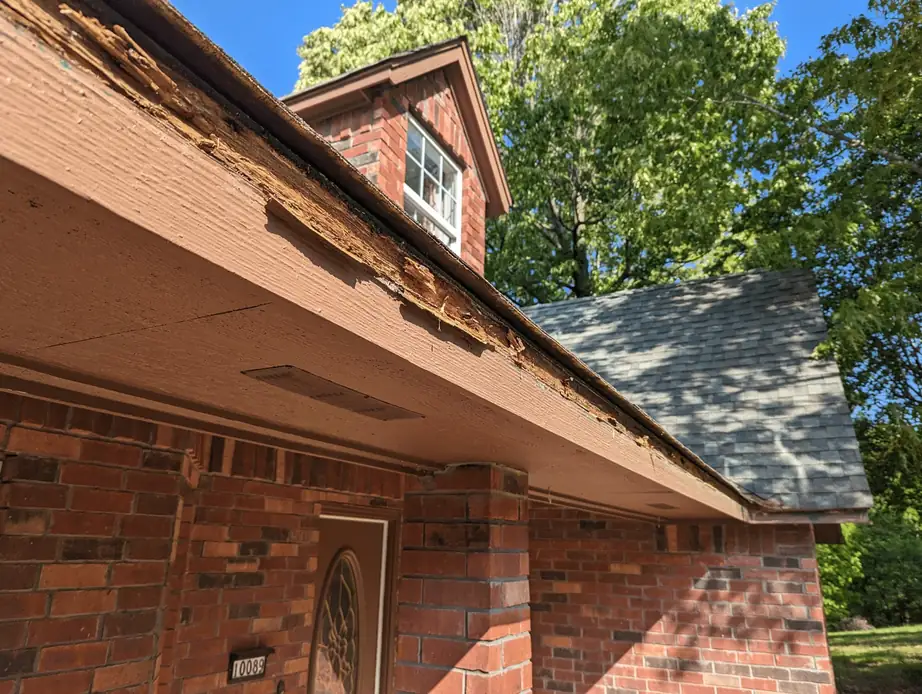
Fascia is the long board that runs along the edge of your roof. It is the board your gutters hang from, and it takes a beating. Water runs off the roof and onto it, year after year. On many older homes with wood fascia and soffit, that water eventually wins, and the boards soften, rot, and need to be replaced.
Why fascia rots
All wood fascia decays with time, but some spots go first. Corners where gutters are hung are common trouble spots. So are gables that get a lot of sun, and areas where the roof slope is very shallow.
The number one reason fascia rots is a leaking gutter. Seamless gutters are put together at the corners with a miter and sealed with sealant. Good sealant holds for a long time but still needs to be redone roughly every 10 to 15 years. Resealing is often overlooked, and a leaking corner drips water onto the fascia instead of carrying it to the downspout. Add a gutter that holds water or overflows, and the board stays wet.
What rotten fascia leads to
The visible problems come first: crumbling or soft wood, mold, uneven surfaces, and paint that will not stick. But the bigger issue is what is behind the fascia.
Many homes have a 1x6 cedar fascia board over a 2x4 sub-fascia, with a soffit underneath that is often made of thin plywood. Once the fascia rots out, water gets back into the sub-fascia and the soffit. If it goes on long enough, the rafter tails can be damaged too. The results are:
- Rotted sub-fascia, which can lead to sagging roof lines and gutters that fall off the home.
- Rotten soffit, which leaves holes in the underside of the eave and exposes the attic to weather.
- Open access for squirrels, birds, and other animals to get into the attic.
How wood fascia is replaced
Replacement starts with removing every bit of rotted wood. This is the hardest and most hazardous part of the job. You are working with mold and mildew, rusty nails and screws, splintering wood, and cutting tools close to your face, usually from a ladder. A hammer, pry bar, cat's paw nail puller, an oscillating saw, gloves, a mask, and eye protection are the basics. Be careful around the drip edge and soffit, because both are easy to damage while the old board comes off.
Next comes the sub-fascia if it is damaged. Boards should meet in the middle of a truss or rafter tail so the ends can be nailed solidly. Treated lumber is worth using for the replacement, because a board that has rotted once is in a spot where moisture is likely to return.
Then the new fascia goes on. Material matters a great deal here. Exterior fascia should be organic cedar or a synthetic board such as LP SmartTrim or James Hardie board. Cedar is usually the best choice, but cost or the situation can make a synthetic board a sensible option. What you should not do is use a cheaper interior trim board. It looks fine at first, but it rots quickly even when it is painted or sealed. Galvanized framing nails, about 3 inches long, hold the board.
The last step is caulking and paint. Caulk fills nail holes and seams so the surface is smooth, and two or three coats of high-grade exterior paint on every exposed side protect the board.
Fix the fascia before the gutters go on
This is the part homeowners most often miss. If you are replacing gutters and the fascia behind them is soft, new gutters will not hold. Hangers need solid wood to bite into, and a new gutter hung on rotten fascia will sag, pull away, or leak at the first heavy rain. The wood has to be sound before anything gets hung on it.
Chappell Gutter & Exterior added fascia and soffit repair for exactly this reason, so that homeowners could take care of the repairs needed before installing a new gutter system with a single contractor. The crew is trained to solve fascia problems before new gutters are installed, because older homes may have fascia damage that leads to bigger trouble if it is covered up.
Do it yourself or hire it out
Replacing a short run of fascia at a low eave is something a handy homeowner can attempt. Long runs, second-story edges, gable ends where you have to match the roof pitch, and any case where the soffit and sub-fascia are also damaged are better handled by a crew. It is dangerous work, and it is easy to damage the drip edge or leave moisture behind.
Whichever way you go, deal with the cause as well as the board. If the old fascia rotted because a gutter corner leaked, a fresh board on the same leaking gutter will rot too. Reseal the gutter, check the slope, and make sure water has a clear path to the downspouts.
Chappell Gutter & Exterior repairs rotted wood fascia and also addresses damaged aluminum and vinyl fascia and soffit. See our fascia and soffit page at /services/fascia-and-soffit or call (479) 717-7726 for a look at your roofline.
Chappell Gutter & Exterior, (479) 717-7726
Call (479) 717-7726More articles
Do Gutter Guards Actually Work? An Honest Answer
Guards make gutters easier to live with, but they do not make them maintenance free.
How to Fix Gutters Full of Water and Overflowing
Standing water in a gutter is a symptom, and the cause is usually one of a few things you can check in an afternoon.