How to Fix Gutters Full of Water and Overflowing
Standing water in a gutter is a symptom, and the cause is usually one of a few things you can check in an afternoon.
October 1, 2026 · 4 min read
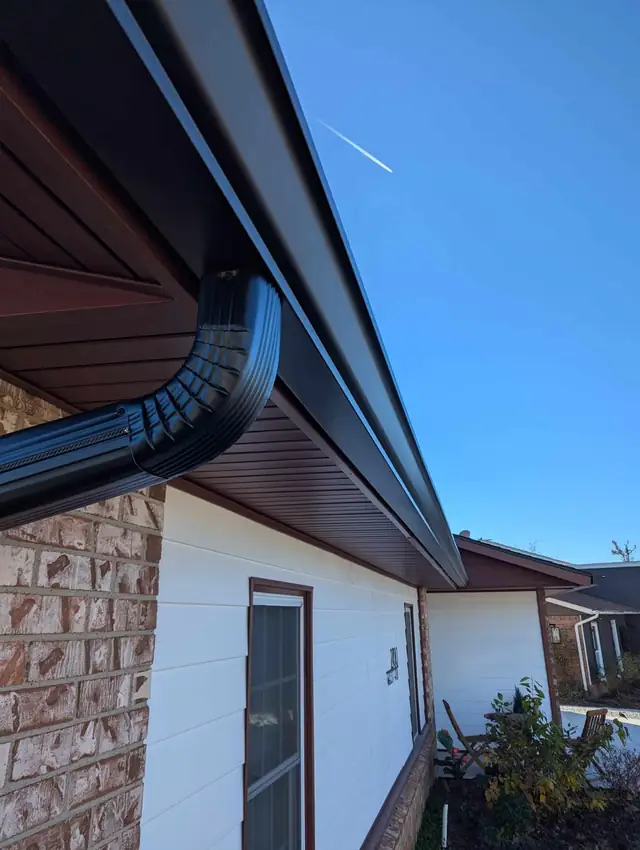
Gutters are supposed to move water, not hold it. When a gutter is full of water days after a storm, or overflows in a normal rain, something in the system is not working. The good news is that the causes are limited, and you can narrow down which one you have with a garden hose.
Ignoring it is expensive. Standing water breaks down gutter sealant, soaks the fascia board behind the gutter, and adds weight that pulls the gutter further out of slope. In the worst cases, a gutter overloaded with water and debris falls off the house.
The three usual causes
- A clog in the gutter or the downspout. This is the most common reason water will not drain.
- Improper slope, sometimes called misslope. If a gutter pitches the wrong way, or sags between hangers, water collects in the low spots.
- Too much water for the system. A gutter or downspout that is too small for the roof it serves will overflow in heavy rain even when it is clean.
There are two more things worth looking for. Water that shoots over the front of the gutter at a roof valley, where two roof planes dump into one spot, often needs a splash guard or a deflector to keep it in the trough. And a downspout outlet that is crushed, blocked at the elbow, or connected to a buried drain that is plugged will back water up the whole run.
Step 1: Clean the gutters by hand
If a gutter is not draining, there is most likely a blockage. Start by scooping the debris out by hand, from a ladder or from the roof if you can do so safely. Hands work better than a pressure washer or a leaf blower for the heavy stuff, because you can feel what is packed in the corners and around the outlet.
Step 2: Flush the gutter with a hose
Next, run a flush. Put a hose nozzle on the jet setting and push the remaining grit, shingle grains, and leaf mush toward the downspout. Pay special attention to the corners. Fine debris hides there, and those corners are also where leaks begin.
Step 3: Run a water flow test
Once the gutter is completely clear, switch the nozzle to shower. Aim the water at the roofline from the high end, the end farthest from the downspout, and let it trickle into the gutter. Keep going until water starts moving down the downspout. Then stop and watch what is left behind.
A film of water that dries out quickly is normal. Chappell Gutter flags any gutter that holds more than about 3/8 to 1/2 inch of water as misslope. If a gutter holds more than an inch, that is a real warning sign, because debris collects where water pools, the added weight makes the gutter sag more, and eventually the pitch cannot be fixed without taking the gutter down.
Step 4: Reslope the gutter if it holds water
Gutters do not need much pitch toward a downspout. Even a level gutter will drain, because water can only get so high before it runs out. Often the fix is as small as raising the high end or lowering the low end by about 1/4 inch. Every gutter is different, and some need more adjustment than others. A level and the water itself are the two best tools for spotting the problem.
If the gutter is pulling away from the fascia, loose hangers are the likely reason, and the fix is to replace or tighten them so the gutter sits tight to the board at the right slope.
Step 5: Reseal leaking corners and end caps
A gutter that has been holding water tends to leak at the corners and end caps as well. To reseal, dry the gutter completely first. A leaf blower clears out standing water, and a dry paper towel helps with the old sealant. Once the area is fully dry, apply fresh gutter sealant over the old seal. Sealant on a wet surface will not hold.
Check the downspouts
If the gutter is clean, sloped, and sealed but still overflows during a downpour, look at the downspouts. A standard 2x3 downspout can struggle on a big roof. Chappell Gutter installs 3x4 oversized downspouts as standard on new systems for exactly that reason. If the downspout empties into an underground extension, that drain may be clogged and need to be jetted out.
When to call a pro
Do the flush and flow test yourself if you are comfortable on a ladder. Call someone if any of these apply:
- The gutter still holds water after it is cleaned and flushed.
- The gutter is visibly sagging, pulling away from the house, or leaning.
- You see soft, dark, or crumbling fascia behind the gutter.
- Water overflows even when the gutter and downspout are clean, which points to sizing or slope.
- The gutters are above one story and you do not want to be on a ladder.
A typical repair visit for refastening, re-sloping, resealing, or reattaching downspouts runs $120 to $200 and takes about one to three hours, depending heavily on what the gutters need. A full realignment starts at $299.
For repairs like these, see our gutter repair page at /services/gutter-repair or call Chappell Gutter & Exterior at (479) 717-7726.
Chappell Gutter & Exterior, (479) 717-7726
Call (479) 717-7726More articles
Do Gutter Guards Actually Work? An Honest Answer
Guards make gutters easier to live with, but they do not make them maintenance free.
How to Repair Rotted Wood Fascia on a Home
Wet fascia is slow to show and expensive to ignore, and it has to be fixed before new gutters go up.