Do Gutter Guards Actually Work? An Honest Answer
Guards make gutters easier to live with, but they do not make them maintenance free.
October 1, 2026 · 4 min read
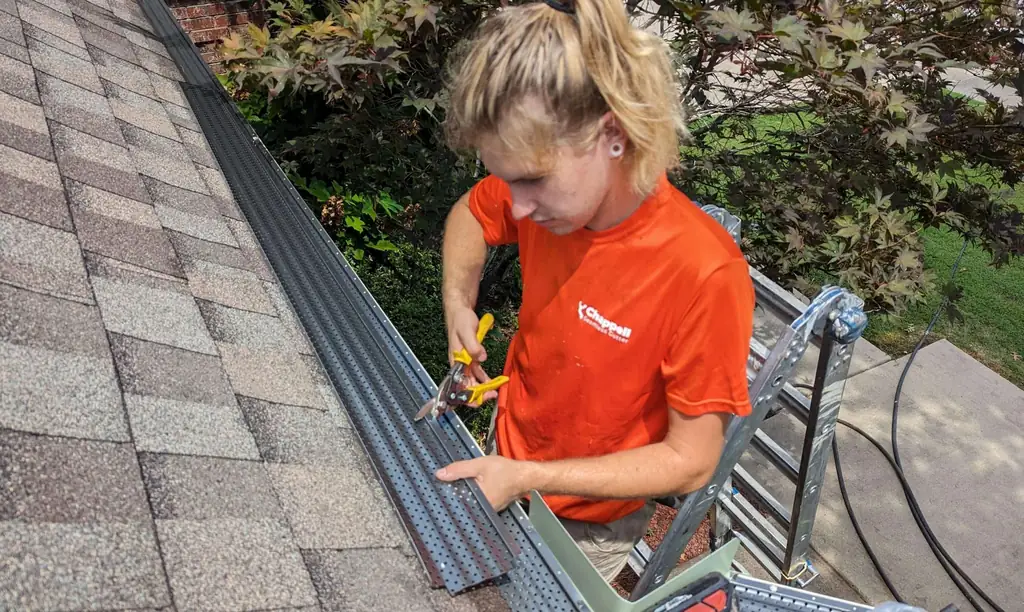
The question we hear most about gutter guards is whether they actually work. The honest answer is yes and no. A good guard keeps most of the large debris out of your gutters and can save you a lot of time on a ladder. A guard that is wrong for your trees, or one sold as a cure-all, can cause more trouble than open gutters ever did.
Chappell Gutter & Exterior has been cleaning and installing gutters in Northwest Arkansas since July 2020, and the message to homeowners has not changed: no gutter guard is perfect. Think of a guard as a tool that makes your gutters more manageable, not as a force field around them.
What a guard keeps out
Gutter guards keep the majority of large debris out of the trough. That means leaves, sticks, and nuts. On a lot with oaks or maples dropping leaves every fall, that alone can turn a messy twice-a-year chore into something you barely think about.
Water still gets in, which is the whole point. In normal rain and in heavy rain, most guard styles move water into the gutter just fine. When a homeowner reports overflow behind a guard, the cause is usually one of two things: the guard was not installed correctly, or the gutter underneath and the top of the guard need to be cleaned.
What still gets through
Most guards still let small debris in. Think shingle grit, pine needles, small twigs, and tree buds. That material builds up slowly, and it generally will not cause trouble from one year to the next, but it does not disappear. Over time it settles in the bottom of the gutter and in the corners.
Homes with a newer roof deserve a special mention. New shingles shed a lot of their granules in the first year or so after installation, and those grains wash straight into the gutters. A guard will not stop all of it.
Do guarded gutters still need cleaning?
Yes. Every gutter with guards will eventually need attention. How soon depends on the type of guard and on the trees around your house. The practical recommendation from Chappell Gutter is a gutter flush every 5 to 10 years for gutters with guards. A flush means clearing out the fine debris with high-pressure water and cleaning off the top of the guards so water keeps moving into the gutter and out through the downspouts.
That is a very different schedule from open gutters, which can need cleaning once or twice a year, so guards are still a real improvement. They just are not a promise that you will never touch your gutters again. The biggest misconception about gutter guards is exactly that promise.
When we do not recommend guards
We do not recommend installing gutter guards on gutters near pine trees. Pine needles are thin enough to slip through most guard openings and then lie in the gutter where you cannot see them. Needles that do not fall through can stay on top of the guard. Either way you end up with a guard you cannot fully trust and a gutter you cannot easily check. If pines drop onto your roof, a regular cleaning schedule is usually the better plan.
Other things that influence whether a guard is a good fit include your roof pitch, how many valleys feed the gutter, how close the branches hang, and whether the fascia board behind the gutter is straight and sound. A short conversation about your actual house beats a sales pitch about a product.
The guard Chappell Gutter recommends
The guard the crew recommends is Armor Lock. It is a self-locking, powder-coated aluminum guard with small holes and double reinforced edges for rigidity and strength. Self-locking C-clips hold the guard firmly to the gutter, even in strong winds.
The reasons are practical. A rigid aluminum guard stays flat instead of sagging between hangers. The small holes block most of what falls from a typical tree. The clips mean it stays put in a Northwest Arkansas windstorm. And when it is time for a flush, the guard can be cleaned off along with the gutter beneath it.
Questions worth asking any installer
- Which trees overhang my roof, and does that change the recommendation?
- What will still get into the gutter, and how often should it be flushed?
- How is the guard attached, and will it hold in wind?
- Is the gutter underneath sound, sloped correctly, and sealed at the corners? A guard on a leaking gutter just hides the leak.
- Will the downspouts and any underground drains be checked so the water has somewhere to go?
That last point matters more than people think. A guard keeps debris out of the gutter, but it does nothing for a clogged downspout or an underground drain that has not been flushed in years. Water that cannot leave the system will back up whether a guard is on top or not.
The short version
Guards work when the guard matches the house and the trees, when it is installed properly, and when the homeowner understands it still needs a flush every 5 to 10 years. They are a poor choice next to pine trees. If you want an honest opinion on your own gutters, Chappell Gutter & Exterior can look at the roofline, the trees, and the existing gutters and tell you plainly whether guards make sense.
You can read more about the options on our gutter guards service page at /services/gutter-guards, or call (479) 717-7726 to talk it through with the crew in Springdale.
Chappell Gutter & Exterior, (479) 717-7726
Call (479) 717-7726More articles
How to Fix Gutters Full of Water and Overflowing
Standing water in a gutter is a symptom, and the cause is usually one of a few things you can check in an afternoon.
How to Repair Rotted Wood Fascia on a Home
Wet fascia is slow to show and expensive to ignore, and it has to be fixed before new gutters go up.