How to Refasten a Downspout Into Brick Siding
A loose downspout on a brick wall is a common fix, and the trick is anchoring into the brick and never the mortar.
October 1, 2026 · 4 min read
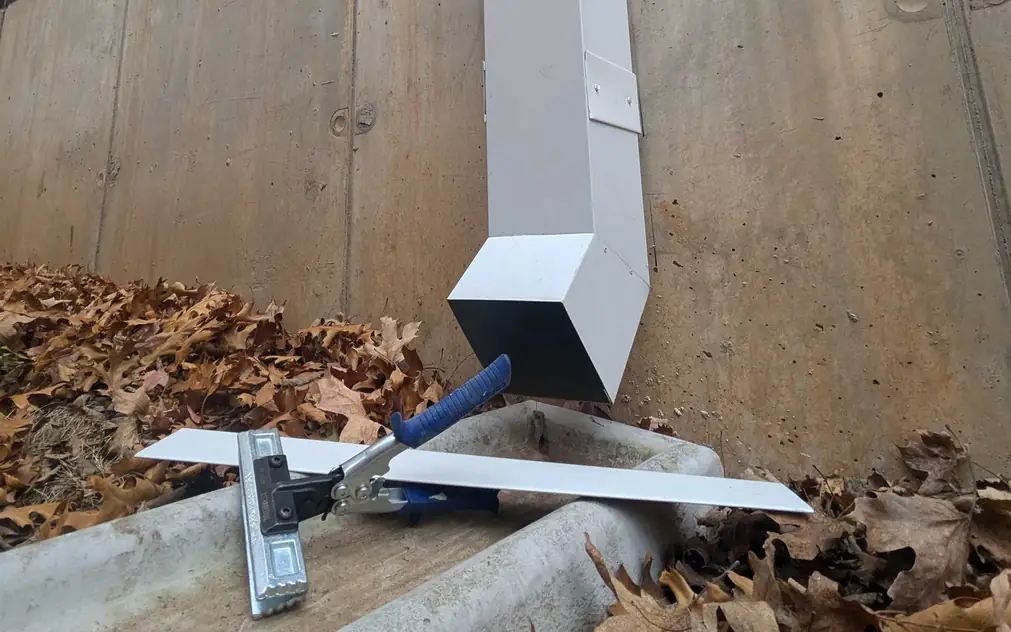
A downspout that has come loose from a brick wall is one of the most common repairs on any gutter system. The pipe swings in the wind, rattles in a storm, or pulls away at the top and sends water running down your wall. It looks like a big problem, but the fix is usually simple if you use the right hardware.
Why downspouts come loose from brick
In most cases the downspout was not installed with the right screws, or it was fastened into the mortar instead of the brick. Mortar is soft, contains air pockets, and flakes over time. A screw in mortar may feel tight on the day it goes in, but it works loose eventually. The most common reason downspouts disconnect from a house is that they were anchored to the mortar.
The rule is simple: drill into the brick itself and never anchor into the mortar.
What you will need
- A drill, and ideally an impact driver as well
- A 3/16 inch masonry drill bit with a carbide tip
- 3/16 by 1-1/4 inch Tapcon concrete anchors, which are made to anchor into brick and concrete
- A 1/4 inch nut driver
- Downspout straps, enough for the top and bottom of the run
- Small 1/2 inch painted accessory screws to join the strap to the downspout
- Safety glasses, because masonry dust and bits of brick fly
Step 1: Drill into the brick, not the mortar
Hold the downspout in place against the wall, with the pipe seated over the elbow above it. Using the masonry bit, drill one hole about six inches from the top of the downspout and one about six inches from the bottom. Each hole goes directly into a brick. If a mortar line gets in the way, move the hole up or down until it lands in solid brick.
Step 2: Fasten the straps with Tapcons
Put a Tapcon through the strap and start it by hand, then drive it fully into the hole you drilled. Do the same for the lower strap. Go easy on the driver. Overtightening a Tapcon makes it spin and strip, and a stripped anchor will not hold the strap. Stop when the strap is snug.
Step 3: Fasten the downspout to the straps
Slide the downspout over the elbow above it, wrap the strap around the pipe from both sides, and pull it tight so the two ends overlap. Place one small painted screw through the center of the overlap. Painted screws come in colors to match the gutter, they are easy to drive, and they are small enough not to cause blockages inside the downspout.
Wood, vinyl, and stucco walls are different
Brick and masonry are the case that surprises people. On a siding wall, pros use a 1-1/2 inch hanger screw to hold each strap to the house, one screw per strap, and a wall anchor can help on brick or stucco. Stucco calls for an anchor made for stucco. Either way, each strap is then joined to the pipe with two 1/2 inch painted screws.
What if the strap is missing or the wrong size?
Downspout straps are cheap, but a missing one means you need an exact fit. Chappell Gutter sells a downspout strap repair kit through its online shop for homeowners who have missing or damaged straps. Pros also cut their own straps from gutter coil. For a 3x4 downspout, they cut a piece of coil to 45-1/4 inches, cut it into strips about 1-1/4 inches wide, fold two strips together, and cut through the fold to make a pair. It is a good trick, but it needs tin snips and a table saw, and for most homeowners the store-bought strap or kit is easier.
Common mistakes
- Drilling into mortar instead of brick.
- Using drywall screws or random deck screws in place of Tapcons.
- Overtightening the anchor so it spins out.
- Using only one strap, so the pipe can still swing at the other end.
- Forgetting to check that the downspout is seated over the elbow and sits straight before fastening.
When it makes more sense to call
This is a doable DIY if the downspout is within reach from the ground, the pipe is undamaged, and you have the tools. It stops being a good DIY when the downspout is on a second story, when the pipe is bent or cracked, when several sections have pulled loose, or when the problem is that the gutter itself has pulled away from the house.
A typical repair visit from Chappell Gutter & Exterior, such as refastening downspouts or hangers, runs $120 to $200 and takes about one to three hours, depending heavily on what the system needs. If you already have the downspout and only need it reattached, the crew can look at it and give you an accurate number.
Between the ladder, the masonry bit, and the risk of a fall, the visit is the better deal for many homeowners. For downspout and gutter repairs, see our page at /services/gutter-repair or call (479) 717-7726.
Chappell Gutter & Exterior, (479) 717-7726
Call (479) 717-7726More articles
Do Gutter Guards Actually Work? An Honest Answer
Guards make gutters easier to live with, but they do not make them maintenance free.
How to Fix Gutters Full of Water and Overflowing
Standing water in a gutter is a symptom, and the cause is usually one of a few things you can check in an afternoon.